


Laser Hair Removal with Rheumatoid Arthritis
To be clear, caution is usually a smart, pragmatic approach. If you’ve had surgery or any major medical procedure, you’re given a set of instructions before heading home.
These instructions are specific, and they often include timelines to help understand where you should be throughout the healing process. It’s not only a guide. It provides peace of mind to clients and patients whose only goal is to get back to 100%.
While caution is always preferred, it needs to be accompanied by the latest research and guidelines for care.
Laser hair removal is an investment many want in order to meet their hair-free needs. And it actually is quite accessible, even for those who might think about health conditions.
Rheumatoid arthritis is a common condition many endure. Pain and discomfort are an unfortunate side effect. And any time an opportunity for self-care presents itself would probably be met with open arms.
But is laser hair removal okay for someone dealing with rheumatoid arthritis? Read on to find out.
What is rheumatoid arthritis?
Rheumatoid arthritis is an inflammatory disorder that usually impacts small joints in the hands and feet. For some, the condition can even damage other body systems including but not limited to the skin, eyes, lungs, heart, and blood vessels.
Rheumatoid arthritis is an auto-immune disorder and occurs when the immune system mistakenly attacks body tissues.
It differs from osteoarthritis in that rheumatoid arthritis impacts the lining of joints. This leads to painful swelling and can ultimately lead to bone erosion or joint deformity.
In some severe cases, rheumatoid arthritis can lead to physical disability.
What are the initial signs of rheumatoid arthritis?
Anyone experiencing tender or swollen joints and routine joint stiffness might want to consult their doctor. These are often signs associated with rheumatoid arthritis.
Fingers, hands, and toes – smaller joints – are the most common early hosts of rheumatoid arthritis. If the condition progresses, symptoms can spread to the shoulders, hips, elbows, ankles, and knees.
If the condition progresses even further, other body areas may be impacted like the skin, eyes, lungs, heart, kidneys, and nerve tissues, among others.

… clients can be treated on any medication with no special considerations.

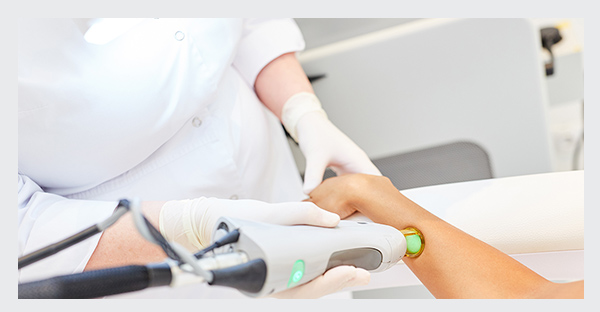
Are there any restrictions with laser hair removal with rheumatoid arthritis?
A quick Google search from certain outlets would lead you to believe laser hair removal can’t be done for clients with rheumatoid arthritis out of an abundance of caution. The reason? Many doctors worry how the laser will impact the person on medication for the condition. A common prescription for rheumatoid arthritis is Methotrexate. Some worry about the possibility of photosensitivity if laser hair removal clients went through with treatments.
No special policies need to be in place for those with rheumatoid arthritis who want laser hair removal. As the technology has advanced with laser hair removal, so too has the understanding that clients can be treated on any medication with no special considerations.
The only exception to this would be topical medication. But even that’s a simple fix. Laser hair removal professionals would ask that their medication not be applied or have it wiped away before the laser touches the skin.
It’s reassuring to know laser hair removal can work with clients who have rheumatoid arthritis.
That is absolutely true. And as more research is done on this topic and others, more clarity will come into the picture.
The best method for peace of mind is discussing everything with a reputable laser hair removal professional. They’ll illustrate all the dos and don’ts to make your hair-free journey safe and enjoyable.